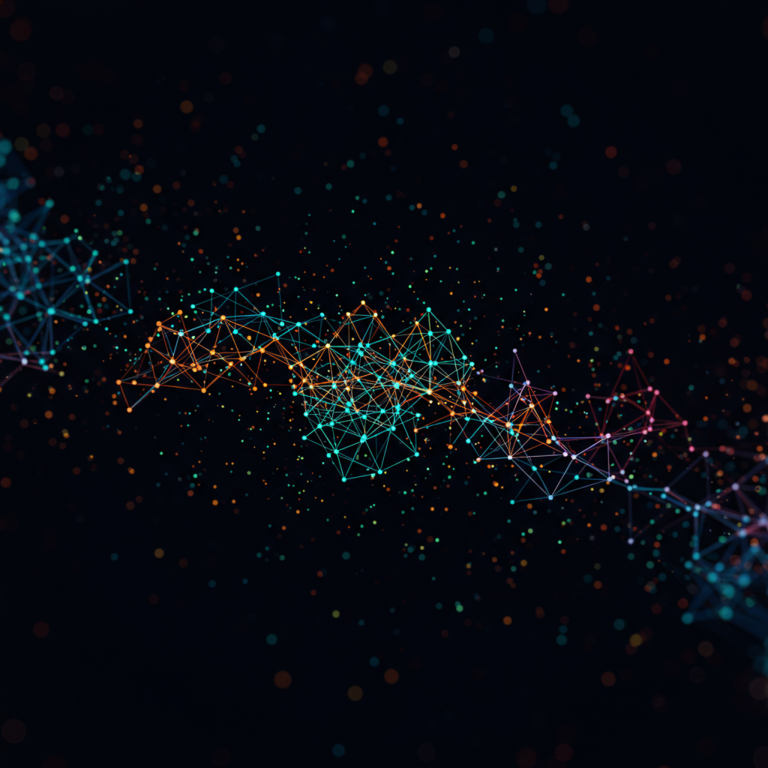

In the realm of data analysis and information architecture, knowledge graphs stand as a revolutionary way to visualize and understand complex relationships. These structures enable the integration of vast amounts of data across various domains, providing a comprehensive, interconnected web of knowledge. Imagine navigating through a 3D space, where concepts, entities, and their relationships are not just points on a graph but exist in multiple dimensions, offering a depth of insight previously unattainable.
**Visualizing Knowledge in 3D**
The leap from traditional 2D graphs to 3D representations marks a significant advancement in data visualization. In a 3D space, knowledge graphs can exhibit a more nuanced depiction of relationships, showcasing how entities interact on multiple levels and from different angles. This multidimensional approach not only enhances our understanding but also makes the exploration of complex information more intuitive and engaging.

**Graph 1: The Interconnected Web of Global Economies** showcases the intricate relationships between different countries’ economies, highlighting dependencies, trade partnerships, and financial flows in a dynamic, 3D space.
**Graph 2: The Human Knowledge Network** illustrates how various fields of study, like science, technology, and humanities, are interconnected, revealing the multidisciplinary nature of innovation and discovery.
**Graph 3: Environmental Impact and Sustainability** maps out the complex interactions between human activities, natural ecosystems, and climate change, providing insights into the balance needed for sustainable development.
Through these 3D visualizations, knowledge graphs offer a unique lens to view and analyze the interconnectivity of data, making them an invaluable tool for researchers, analysts, and anyone keen on understanding the complexities of our world.
About the Author